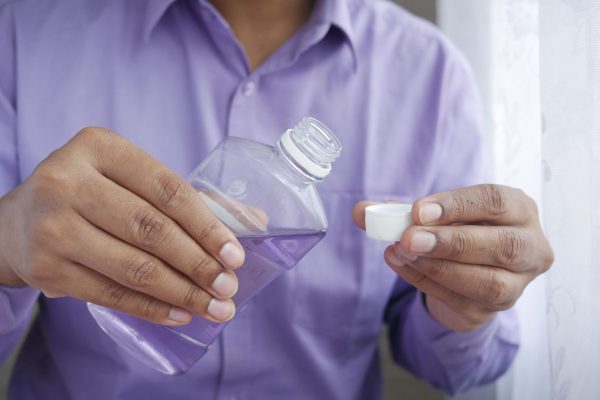
What kind of mouthwash do you use?
There are so many choices these days and the claims make it hard to know which one to choose. All of them promise to give you sweet-smelling breath. Some state that they’ll strengthen enamel. Others guarantee to whiten your teeth or pledge to kill germs that cause gum disease.
Your mouth is teeming with bacteria, so this may sound like a good thing. Swish around a little mouthwash to kill all of those wicked microbes and you’ll have a cleaner, healthier and fresher-smelling mouth, right?
Well, this is exactly where the problem lies. That’s because these rinses don’t just strip your mouth of bad bacteria. They also wipe out all of the good bacteria that live in your oral cavity.
This stripping away of beneficial microbes can severely upset natural biological processes that protect your metabolism and cardiovascular health.
🪥Mouthwash Users 55% More Likely to Develop Type 2 Diabetes
A 2017 study published in Nitric Oxide discovered that people between 40 and 65 who use over-the-counter mouthwash twice a day are 55% more likely to develop diabetes or pre-diabetes compared to people who swish only once daily. Further studies confirm this connection, even among younger mouthwash users.
This is likely due to the impact mouthwash has on the bacteria in your mouth. Many of these crucial oral microbes are responsible for producing nitric oxide. When they are killed off with an antiseptic mouthwash, the production of nitric oxide is diminished.
This, in turn, could influence metabolic processes, leading to metabolic disorders such as diabetes.
This same nitric oxide disruption could affect your blood pressure, too. Nitric oxide bioavailability is essential for vascular health. However, using antiseptic mouthwash for as little as a week decreases oral nitrite production by about 90% and results in measurably lower blood levels of nitric oxide.
This can cause a jump in systolic and diastolic blood pressure by 2 to 3.5 mm Hg. And these higher blood pressure readings can start as early as the first day of mouthwash use.
👄A Safer Way to Freshen up Your Mouth
In addition to reducing your nitric oxide levels, commercial mouthwashes contain many ingredients that are potentially unhealthy for you. Chlorhexidine, alcohol, benzalkonium chloride and parabens are just a few. Toxic compounds like these and others are linked to cancer, erosion of enamel and other health problems.
If you feel you simply can’t live without your commercial mouthwash, opt for rinsing no more than once a day. Better yet, try finding a good all-natural mouthwash to replace it with. You can even make your own at home.
All you have to do is mix a cup of distilled water with a teaspoon of baking soda and a few drops of peppermint oil.
This is a rinse you can feel good about. It works so well that it performs even better than chlorhexidine to protect chemotherapy patients against ulcerative mouth sores. In a comparison, only 25% of patients using baking soda developed mouth ulcers compared to 65% in the chlorhexidine group.
And you don’t need to worry if baking soda is bad for your mouth. In an analysis of the effects of several mouth rinses, the Multinational Association for Supportive Care in Cancer finds that rinsing with baking soda is harmless, yet helpful in maintaining oral hygiene.
SOURCES:
Joshipura KJ, Muñoz-Torres FJ, Morou-Bermudez E, Patel RP. Over-the-counter mouthwash use and risk of pre-diabetes/diabetes. Nitric Oxide. 2017 Dec;71(1):14-20.
Sindhusa BSD, Srinivas R, Srinivas P. Does Mouthwash Use Increase Risk of Diabetes and Hypertension? A Systematic Review. Journal of Applied Dentistry and Oral Sciences. 2025 Sept; 11(3):68-76.
Kapil V, Haydar SM, Pearl V, Lundberg JO, Weitzberg E, Ahluwalia A. Physiological role for nitrate-reducing oral bacteria in blood pressure control. Free Radic Biol Med. 2013 Feb; 55: 93–100.
Choi SE, Kim HS. Sodium Bicarbonate Solution versus Chlorhexidine Mouthwash in Oral Care of Acute Leukemia Patients Undergoing Induction Chemotherapy: A Randomized Controlled Trial. Asian Nurs Res (Korean Soc Nurs Sci). 2012 Jun;6(2):60-6.
McGuire DB, Fulton JS, Park J, Brown CG, Correa ME, Eilers J, Elad S, Gibson F, Oberle-Edwards LK, Bowen J, Lalla RV. Systematic review of basic oral care for the management of oral mucositis in cancer patients. Support Care Cancer. 2013 Nov;21(11):3165-77.