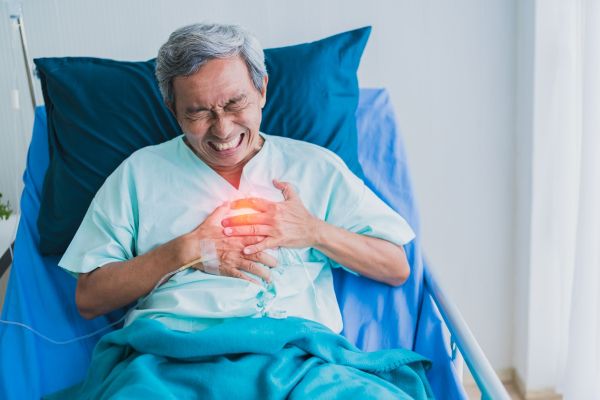
Pretty much everyone knows that if an artery gets clogged it can trigger a heart attack. What many people may not realize is that heart attack symptoms often differ between men and women.
Sure, classic symptoms such as chest pain are common in both sexes. But women are much more likely to have less common symptoms such as fatigue, shortness of breath, a feeling of indigestion or back pain – without any chest discomfort at all.
This can lead to problems getting a proper diagnosis for women. It’s something I remember from the days when I was in training.
Back then, a woman would come in and say she was experiencing shortness of breath and doctors would tell her she was just having an anxiety attack. Or she would indicate abdominal discomfort that doctors would diagnose as a gastric issue when indeed, it was an inferior wall myocardial infarction.
We still see this type of sexism today. “Oh honey, you’re just stressed out.” Or “you’re just being hysterical.”
This is a hold-over from the days when doctors deemed hysteria to be a woman’s disease – derived from the Greek word “hystera,” which means uterus. It was believed that hysteria was caused by a defect in the uterus or womb. So only women could become hysterical.
Even now, young male doctors — guys in their 30’s and 40’s — treat women and brush aside their concerns without a second thought.
❤️Cardiac Arrest: Warning Signs Differ Between Men and Women
Cardiac arrest isn’t the same thing as a heart attack.
A heart attack (myocardial infarction) happens when there is a blockage and your heart can’t get enough oxygen-rich blood.
Sudden cardiac arrest, on the other hand, occurs when the heart’s electrical system malfunctions. The heart suddenly and unexpectedly stops beating. It can no longer deliver blood to the rest of your body, so everything just starts shutting down.
It is a leading cause of natural deaths here in the U.S., and nearly 90% of sudden cardiac arrests are fatal. Even worse, it’s estimated that one out of about every seven people in the U.S. will die of sudden cardiac death in the course of a year.
We often hear that there are no warning signs of sudden cardiac arrest. But an August 2023 Cedars-Sinai study found that many people experience warning symptoms up to 24 hours beforehand. And once again, the symptoms vary by sex.
Men displayed a variety of symptoms which included chest pain, labored breathing and sweating.
Women? Not so much. Labored breathing was the only significant symptom associated with sudden cardiac arrest.
So imagine how much harder it is for a woman to be taken seriously and diagnosed properly if she walks into the ER and says she is having a hard time breathing?
These are two examples of why it is so important for women to recognize their own heart symptoms and insist on treatment when doctors are saying “No.”
📞Know When to Call 911
Preventive measures for both heart attacks and cardiac arrest are very similar, whether you are male or female.
You know the drill.
Eat a heart healthy diet, get plenty of physical activity, maintain a healthy weight and take control of your blood pressure.
But when it comes to the risk of cardiac arrest, it’s also very important to correct certain mineral imbalances that may cause your heart’s electrical system to malfunction.
More importantly, knowing when to call 911 is CRITICAL!
Whether you are male or female, please forget the stereotypical “elephant sitting your chest” scenario.
Instead, call 911 immediately if you ever…
- Experience severe chest pain
- Have sudden difficulty breathing or unexplained shortness of breath
- Feel like your heart is beating so fast it will burst out of your chest
- Experience jaw, back, arm or abdominal pain – possibly accompanied with nausea, vomiting, and sweating
- Suffer immediate or severe abdominal pain
For a heart attack, you can administer aspirin to help prevent dangerous clotting. Just chew and swallow it while waiting for the ambulance to arrive.
As far as cardiac arrest is concerned – which may be the case when a person stops breathing altogether – doing CPR or using an automated external defibrillator (AED) can greatly improve that person’s chance of survival. Some gyms, offices and public buildings have these readily on hand.
These machines check a person’s heart rhythm and determine if it requires a shock. (Just remember to call 911 before providing support efforts!)
If you don’t have access to an AED or if it fails to resuscitate the patient, stay on the line with 911 and have them talk you through the steps for CPR.
Prevention is key, but it is always good to know how to respond in an emergency situation.
SOURCES:
Sudden Cardiac Death. Cleveland Clinic. Last updated on 12/27/2023.
CPR Facts & Statistics. American Red Cross. Last updated on 01/06/2026.
Martin SS, Aday AW, Allen NB, Almarzooq ZI, Anderson CAM, Arora P, Avery CL, Baker-Smith CM, Bansal N, Beaton AZ, et al., 2025 Heart Disease and Stroke Statistics: A Report of US and Global Data From the American Heart Association. Circulation. 2025 Feb 25;151(8):e41-e660
Reinier K, Dizon B, Chugh H, Bhanji Z, Seifer M, Sargsyan A, Uy-Evanado A, Norby FL, Nakamura K, Hadduck K, Shepherd D, Grogan T, Elashoff D, Jui J, Salvucci A, Chugh SS. Warning symptoms associated with imminent sudden cardiac arrest: a population-based case-control study with external validation. Lancet Digit Health. 2023 Aug 25:S2589-7500(23)00147-4.